


Mudarabah is one of the important concepts in Islamic banking and finance. But how does Mudarabah actually work?
In simple terms, Mudarabah is a partnership in which one party provides the capital while the other manages the business or investment. The parties agree in advance on how the actual profit will be shared, while the treatment of losses follows the principles of the Mudarabah arrangement while any loss is borne solely by the capital provider (Rabb-ul-Maal), unless such loss results from the Mudarib’s negligence, misconduct, or breach of agreed terms
Mudarabah is also used by Islamic banks as a structure for managing certain savings and investment deposits. In Pakistan, the State Bank of Pakistan describes Mudarabah as a partnership where one party provides funds and the other provides expertise and management.
What Is Mudarabah?
Mudarabah is a profit & loss-sharing partnership between two parties:
- Rabb-ul-Maal: The party that provides the capital.
- Mudarib: The party responsible for managing and investing the capital.
The profit-sharing ratio (PSR) is agreed upon when the Mudarabah arrangement is entered into. According to the State Bank of Pakistan, Mudarabah agreement cannot guarantee a fixed profit amount or a profit share linked to the invested capital; rather, the profit sharing ratio is agreed between the parties.
Unlike an arrangement where a fixed amount of return is guaranteed regardless of actual performance, Mudarabah is based on sharing the actual profit generated from the underlying Shariah investment or business activity, according to the agreed mechanism.
How Does Mudarabah Work?
The basic process can be understood in five steps:
-
One Party Provides the Capital
The Rabb-ul-Maal provides the capital for the Mudarabah arrangement.
For example, imagine that you invest PKR 100,000 under a Mudarabah arrangement.
You are providing the capital, so you are the Rabb-ul-Maal.
-
The Other Party Manages the Investment
The Mudarib manages the funds and carries out the investment or business activities in accordance with the terms of the Mudarabah.
In an Islamic banking arrangement, the bank may act as the Mudarib while customers providing the funds act as Rabb-ul-Maal. SBP explains that Islamic banks may place depositors’ funds into investment pools and distribute the resulting profit according to the weightages assigned at the time of the agreement.
-
The Funds Are Invested in Shariah-Compliant Activities
The funds are deployed in activities and investments that comply with the applicable Shariah requirements.
The objective is to generate actual profit through permissible economic activity rather than through interest-based lending.
This is an important distinction in Islamic banking, where financial transactions must follow applicable Shariah principles.
-
The Actual Profit Is Calculated
Once the relevant investment period ends, the profit generated from the applicable business or investment activity is determined.
The profit is not simply a predetermined amount attached to the original capital. Instead, it is based on the actual performance of the underlying activity and the agreed profit-sharing mechanism.
-
The Profit Is Shared
The profit is then distributed between the Rabb-ul-Maal and Mudarib according to the agreed profit-sharing ratio.
For example, suppose:
- Capital invested: PKR 100,000
- Actual profit generated: PKR 10,000
- Agreed profit-sharing ratio: 60% Rabb-ul-Maal / 40% Mudarib
The PKR 10,000 actual profit would be distributed according to that agreed ratio:
- Rabb-ul-Maal: PKR 6,000
- Mudarib: PKR 4,000
The important point is that the ratio applies to the actual profit, rather than guaranteeing a fixed amount tied to the original capital. SBP specifically notes that a Mudarabah agreement cannot stipulate a fixed lump-sum profit or a return expressed as a specific percentage of the capital.
What Happens If There is a Loss?
Loss is an important part of understanding how Mudarabah works.
Under the basic Mudarabah structure, a genuine financial loss is borne by the Rabb-ul-Maal in proportion to the capital, while the Mudarib bears the loss of its effort and management.
However, this applies where the Mudarib has acted within the agreed terms and has not committed misconduct, negligence or breach of the Mudarabah agreement.
This risk-sharing element is one of the principles that distinguishes Mudarabah from an interest-based lending arrangement. SBP identifies risk sharing as one of the fundamental principles underlying Islamic banking.
Mudarabah Example in Islamic Banking
Mudarabah can also be used for certain savings and investment products offered by Islamic banks.
In this structure, the customer provides funds and acts as the Rabb-ul-Maal while the Islamic bank acts as the Mudarib and manages the funds according to the approved structure.
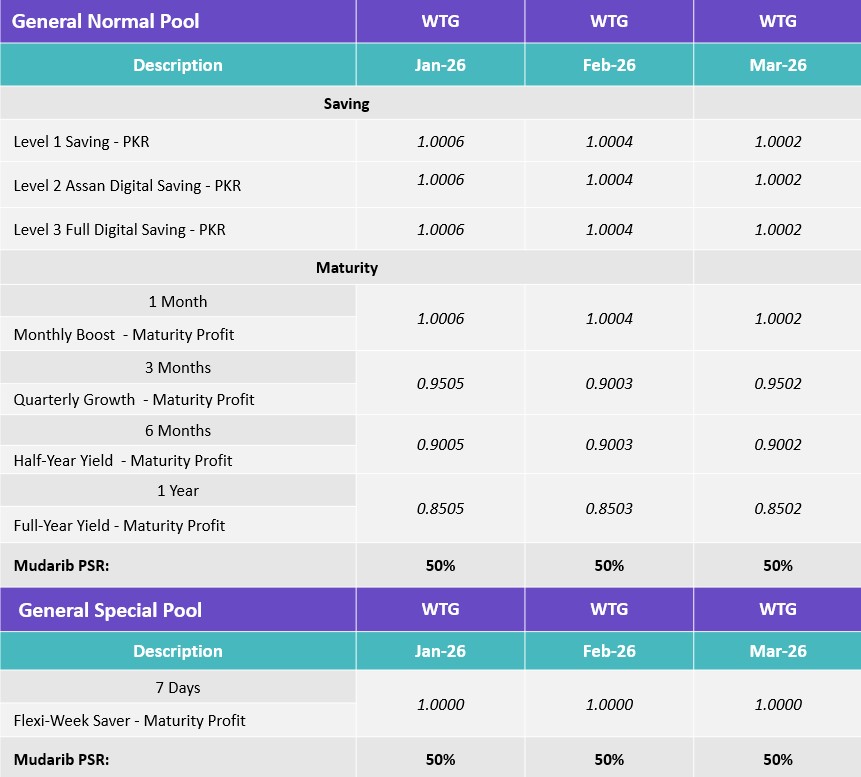
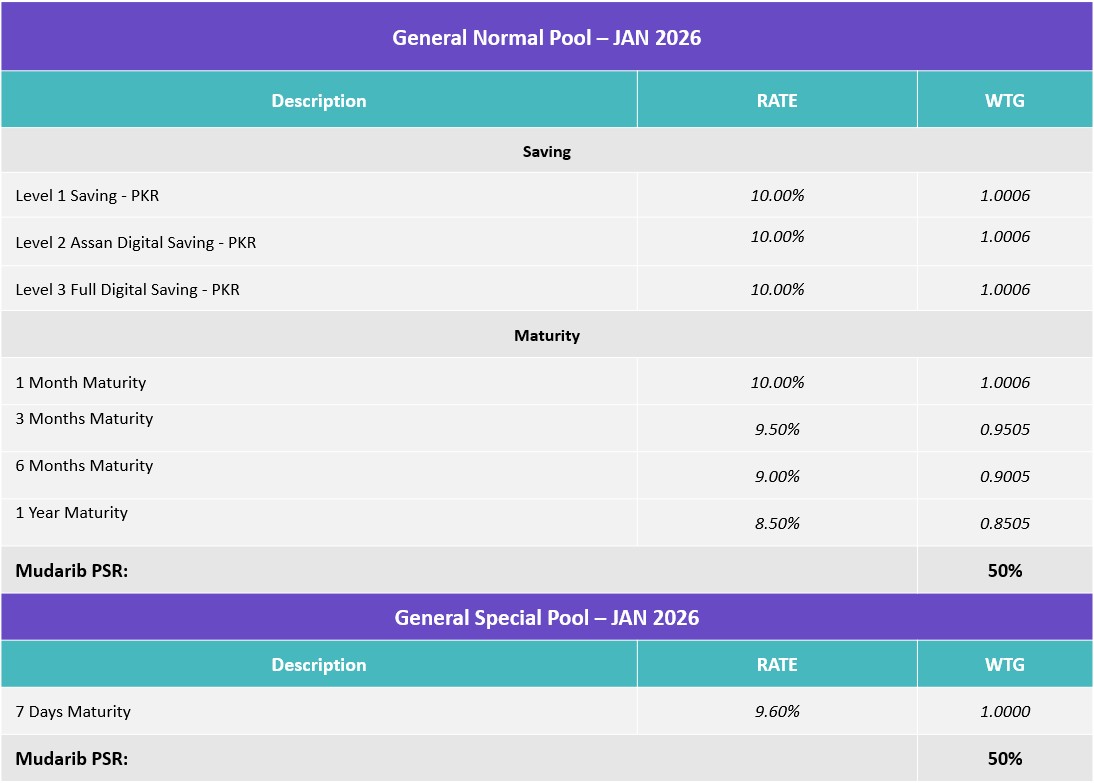
The bank may pool funds from eligible depositors and deploy them through Shariah-compliant investment avenues. The resulting profit is then distributed according to the applicable profit-sharing mechanism and weightages. SBP’s guidance explains that Islamic banks can establish different investment pools based on factors such as the risk and maturity profile of deposits.
At Raqami Islamic Digital Bank, the Raqami Savings Account is structured around a Mudarabah partnership, with the customer as Rabb-ul-Maal and Raqami as Mudarib.
What Are Mudarabah Certificates?
A Mudarabah Certificate is a tenure-based savings and investment product structured on the principles of Mudarabah.
At Raqami, Mudarabah Certificates, formerly referred to as TDRs, are available through the Raqami app. Customers can select from available tenures and invest their funds under the applicable Shariah-compliant Mudarabah structure.
The product is designed around the same fundamental relationship:
Customer → Rabb-ul-Maal
Raqami → Mudarib
The funds are managed and invested according to the approved Shariah-compliance framework and Profit & Loss Distribution and Pool Management Framework, with profit distributed according to the Profit Sharing Ratio and applicable weightages.
You can learn more about Raqami’s Mudarabah Certificate and its applicable terms through the bank’s products and services page.
Mudarabah vs Conventional Interest
Mudarabah and conventional interest-based lending both involve the mobilization and deployment of funds with the expectation of a financial return. However, their underlying structures are different.
In Mudarabah:
- The relationship is based on a partnership arrangement.
- One party provides capital while the other manages the investment.
- Profit is shared according to an agreed profit sharing ratio.
- The return is linked to the actual performance of the relevant investment or business activity.
- The arrangement follows applicable Shariah requirements.
In conventional interest-based lending, interest is charged on a loan or debt regardless of whether the borrower generates a profit from the funds.
This distinction between contractual structure, risk and the source of return is fundamental to understanding Islamic banking.
Types of Mudarabah
Mudarabah can generally be structured as either restricted or unrestricted.
Mudarabah Muqayyadah/Restricted Mudarabah
In Mudarabah Muqayyadah /Restricted Mudarabah, the Rabb-ul-Maal places specific restrictions or conditions on how the funds may be invested or used.
Mudarabah Mutlaqah/Unrestricted Mudarabah
In Mudarabah Mutlaqah /Unrestricted Mudarabah, the Rabb-ul-Maal gives the Mudarib greater flexibility to undertake permissible business or investment activities within the agreed Shariah framework.
SBP recognises both restricted and unrestricted forms of Mudarabah in its Islamic banking guidance/FAQs.
Why Is Mudarabah Important in Islamic Banking?
Mudarabah demonstrates how Islamic finance can structure financial relationships around partnership, investment and shared outcomes rather than interest-based lending.
It can provide a framework for mobilising funds and connecting capital with Shariah-compliant economic activity. In Islamic banking, Mudarabah is particularly relevant to certain savings and investment arrangements.
For customers, understanding Mudarabah also helps explain why an Islamic savings or investment product may operate differently from a conventional interest-bearing deposit.
Frequently Asked Questions About Mudarabah
Is Mudarabah the same as interest?
No. Mudarabah is a profit & loss-sharing partnership, while interest involves a predetermined charge or return on a loan.. In Mudarabah, profit is shared according to an agreed profit sharing ratio and applicable weightages and is linked to the actual performance of the relevant investment or business activity.
Who is the Rabb-ul-Maal?
The Rabb-ul-Maal is the party that provides the capital in a Mudarabah arrangement.
Who is the Mudarib?
The Mudarib is the party responsible for managing the Mudarabah funds or business activity according to the agreed terms.
How is profit divided in Mudarabah?
The profit-sharing ratio is agreed between the parties when the Mudarabah arrangement begins. The agreed ratio applies to the actual profit generated, rather than establishing a fixed amount of profit tied to the original capital.
Who bears the loss in Mudarabah?
Under the basic Mudarabah structure, a genuine financial loss is borne by the Rabb-ul-Maal in proportion to the capital, while the Mudarib bears the loss of its effort and management, subject to the applicable Shariah rules and terms of the arrangement.
Can I invest through a Mudarabah product digitally?
Yes. Islamic banks can offer Mudarabah-based savings and investment products through digital banking platforms. Raqami offers Mudarabah Certificates through its digital banking app, subject to the applicable product terms and conditions.
Understanding Mudarabah in Simple Terms
The easiest way to remember how Mudarabah works is:
Capital + Management → Shariah-compliant Investment → Actual Profit → Agreed Profit & Loss Sharing
Mudarabah is therefore more than simply a way of calculating a return. It is a contractual structure that defines the roles, responsibilities, profit-sharing mechanism and treatment of loss between the parties.
For anyone exploring Islamic banking in Pakistan, understanding Mudarabah is an important step toward understanding how Shariah-compliant savings and investment products work.
Explore Mudarabah-Based Banking with Raqami
Raqami Islamic Digital Bank offers Mudarabah-based savings and Mudarabah Certificates through its digital banking platform. Mudarabah Certificates, formerly known as TDRs, can be accessed through the Raqami app, subject to applicable eligibility criteria, product terms and Shariah-approved structures.
To explore the available Mudarabah products, visit the Raqami Products page or download the Raqami app and manage your banking digitally.
This article is intended for educational purposes and provides a general explanation of Mudarabah. The specific structure, terms, conditions and Shariah rulings applicable to a financial product should be reviewed in the relevant product documentation and Shariah certification.